

9 Signs Your Brand Is Ready for Its Next Stage
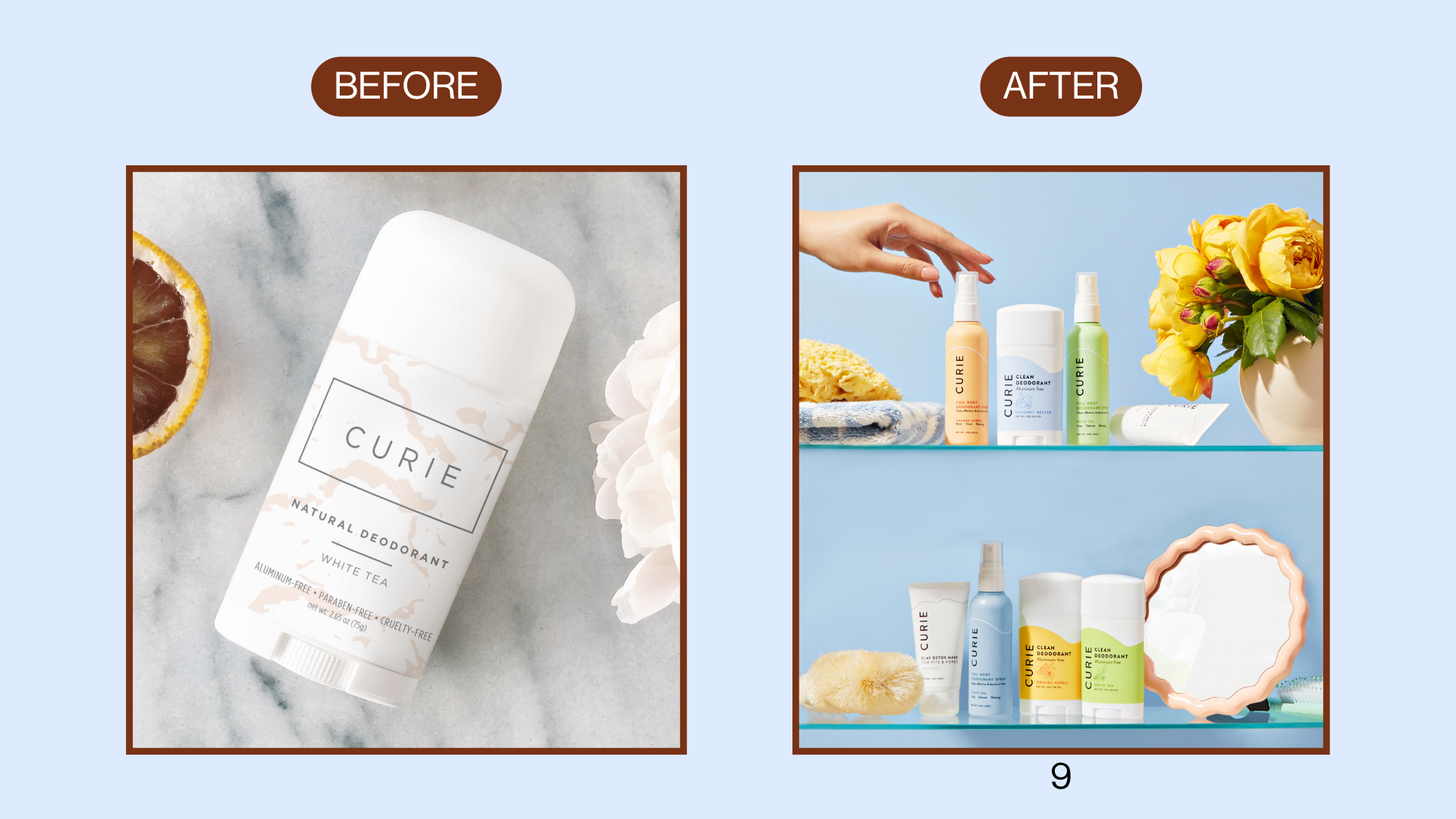
You've done the work. Your product is strong, your customers are loyal, and the business is moving. But somewhere along the way, you've started noticing that your brand isn't quite keeping pace. You’ve outgrown your current brand because you are ready for the next level.
For CPG founders scaling into wholesale, pitching retail buyers, or preparing for a funding conversation, brand identity is essential. It acts as your silent ambassador, determining whether doors open or close before you even have the chance to speak.
Here are the signs that your brand is ready to step up with you.
🚩 Sign #1: Your Packaging Doesn't Support the Price Point You're Targeting
You've moved upmarket. Your formulation, ingredients, or product quality absolutely justifies a premium price. But when a buyer picks up your product, the packaging tells a different story.
This is one of the most common friction points for CPG brands at a growth stage. The product is ready. But the brand hasn't caught up.
What to do: Look at your packaging alongside the brands sitting at the price point you want to occupy. Ask honestly whether yours belongs in that conversation. If there's a gap between your product's quality and how it presents on shelf, that's the brief for your next brand investment.
🚩 Sign #2: Your Brand Doesn't Translate from DTC to Wholesale
A brand built for Instagram and a brand built for a Whole Foods shelf are solving different problems. One needs to stop a scroll. The other needs to survive a crowded fixture, communicate value in seconds, and hold its own against established names with serious design budgets.
If you've started pitching wholesale accounts and the feedback feels lukewarm, or buyers aren't engaging the way you expected, it's worth looking hard at whether your brand is doing its job in that context.
What to do: Test your packaging in the actual environment it needs to perform in. Put it on a shelf, stand back. Does it read clearly? Does it clearly communicate what the product is, it's varietal information, and value propositions? Wholesale buyers are making fast decisions, and your brand needs to make their job easy. You only have seconds to grab their attention
🚩 Sign #3: You Have a Strong Story but Your Visuals Aren't Telling It
A lot of founders at this stage have a compelling brand narrative, a clear point of view, a reason for being that genuinely differentiates them. But the visuals were built early, quickly, and practically. They were good enough to get started. They're not built to carry the weight of where the business is now.
When your story and your visuals are out of sync, you end up doing a lot of explaining. In pitch rooms, on sales calls, at trade shows, you're compensating for what the brand should be communicating on its own.
What to do: Put your brand assets in front of someone who doesn't know your story and ask them what they think your brand is about. The gap between what they say and what you mean is your starting point for the next creative conversation.
🚩 Sign #4: Your Brand Looks Inconsistent Across Touchpoints
Your trade show display, your website, your sell sheet, your packaging, and your Instagram all exist in the same ecosystem. If a buyer, retailer, or customer encounters you at one touchpoint and then finds you at another, those two experiences should feel like the same brand.
Inconsistency at this stage doesn't just look unpolished. It signals to buyers and investors that the business might not be as profitable, organized, or ready for growth as they need it to be.
What to do: Audit every touchpoint a buyer or investor might encounter. Lay them out together and look for the gaps. Cohesion across all of them is a sign of an established brand, audience, and point of view.
🚩 Sign #5: You're Growing Into Rooms Where First Impressions Carry Real Weight
Investor decks. Buyer meetings. Press opportunities. Partnership conversations. These are moments where your brand is being evaluated quickly and often without you in the room to provide context.
If you're starting to show up in higher-stakes spaces, your brand needs to be able to represent you when you're not there. That means it has to communicate credibility, clarity, and ambition, fast.
What to do: Think about the most important room you're trying to get into in the next 12 months. Then ask whether your current brand is the right introduction. If you'd feel the need to caveat or apologise for it, that's the answer.
🚩 Sign #6: Your Brand Reflects Who You Were, Not Where You're Going
Early on, most founders build their brand by looking outward: taking cues from competitors they admire, or leaning into personal taste. That works as a starting point. But once you have an audience, the brand needs to speak to them, not just reflect you. (The exception is founders who came in with an existing personal following, where the personal brand is already doing real work.)
A brand built for your next stage bridges the gap between your visual identity and your business strategy.
What to do: Align your brand with your future trajectory, moving beyond the legacy of where you’ve been. At a growth inflection point, a strategic rebrand becomes one of the smartest investments a scaling founder can make.
🚩 Sign #7: The Photographer and Props Are Outshining Your Label
You've invested in a great product shoot. The styling is beautiful, the lighting is perfect, and the images perform well. But when you zoom in on the label itself, it's not holding its own. The packaging looks like an afterthought next to the props around it.
This is a more common situation than most founders want to admit, and it's a clear signal. If your product needs a lot of styling support to look premium, the label isn't doing enough on its own. On a retail shelf, there are no props. There's no photographer. There's just your packaging, competing for attention in a few seconds.
What to do: Pull up your product images and look at the label in isolation. Crop everything else out. Does it still communicate quality, personality, and clarity on its own? If not, that's where the investment needs to go.
🚩 Sign #8: Your Retail Partners Are Telling You Varietals Aren't Differentiated Enough
Getting that feedback from a buyer is painful, especially when you've already launched. But it's also one of the clearest signs that your brand system needs attention. When varietals look too similar on shelf, buyers can't range them confidently and customers can't navigate them easily. Both of those things slow down your growth.
The deeper issue is usually that the original brand wasn't built with a range architecture in mind. Differentiation across a product line isn't something you can bolt on later without it looking patchy. It needs to be designed from the start.
What to do: If you're hearing this feedback, don't wait for a second buyer to say the same thing. Bring in a brand designer who understands range architecture and can build a system that works across your current line and your future launches.
🚩 Sign #9: You Don't Know What the Next Varietal Will Look Like
This one is less about what's already on shelf and more about what's coming. If you're planning a new product launch and you're genuinely uncertain how it will fit into your existing brand, that's a sign your brand wasn't built as a system.
A well-designed brand identity gives you a framework. New flavours, formats, or sub-lines should feel like natural extensions, not separate decisions you have to figure out from scratch each time. When every launch becomes a new design problem, you lose time, consistency, and the cumulative brand recognition that makes a range feel coherent on shelf.
What to do: Before your next launch, ask whether your current brand gives you a clear answer on how to execute it. If the answer is uncertain, you need a system, not just another label.
Want to Find Out Where Your Brand Stands?
If any of these signs resonated, it's a good signal that your brand is ready to do more work for you.